
NVIDIA RTX PRO 6000 Workstation Edition available to buy ex stock – 2026
We have secured a limited amount of VCNRTXPRO6000B-BLK – NVIDIA RTX PRO™ 6000 Blackwell Workstation Edition which we are now making available to buy to our customers in Europe and USA starting at €14950.
NVIDIA RTX PRO 6000 Price (valid as long as stock lasts) – updated October 2026:
- $16.250 excl. VAT, free shipping in Europe
- €14.950 excl. VAT, free shipping in Europe
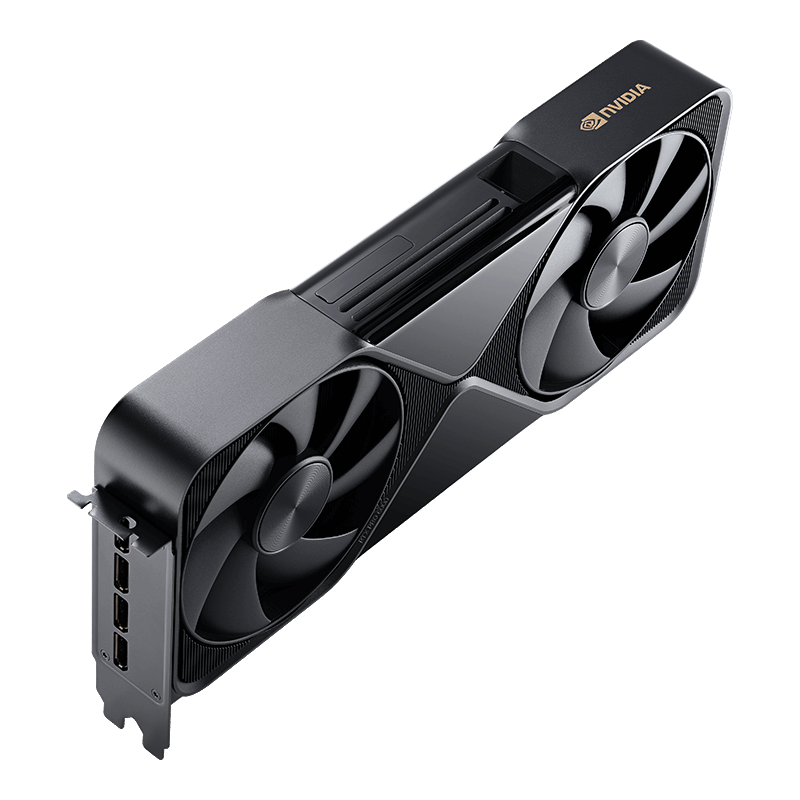
Special features and use cases for the RTX PRO 6000
- 96 GB of GDDR7 with ECC, 1.792 GB/s memory bandwidth – good for inference and finetuning of models
- Can support 120B class LLMs (fp4 quantized)
- Can run up to four 24 GB GPUs for several users (MIG support) – to support a small workgroup of users
- includes 4th Gen Ray Tracing cores – for rendering
This GPU has three times more RAM than the RTX 5090. You can fit 70B class models (at 8-bit), or 120B models (at 4-bit) into this card. e.g. gpt-oss-120b, Llama-3.x-70B, Qwen3-80B-class MoE, with room for KV cache.
Use cases:
- LLM inference and finetuning
- finetuning of physical AI models for robotics applications
- engineering and physics simulations, for example computational fluid dynamics
- cinematic rendering
- high-end gaming, 3D rendering with DLSS 4
- accelerated compute resource for a workgroup (Universal MIG)
- Inference as a service
- GPU as a service
The ability to split this card into up to 4 isolated 24 GB GPUs for multi-user setups is unique for a workstation card.
Comparison of RTX Pro 6000 Workstation Edition and RTX 5090 for buyers
Specs side by side (both use the same GB202 chip):
| RTX 5090 | RTX PRO 6000 WS | |
|---|---|---|
| Active SMs | 170 | 188 (+10.6%) |
| CUDA cores | 21,760 | 24,064 |
| Boost clock | 2,407 MHz | 2,617 MHz |
| Memory bandwidth | 1,792 GB/s | 1,792 GB/s |
| Memory | 32 GB | 96 GB (ECC) |
| Power limit | 575 W | 600 W |
The RTX PRO 6000 Workstation edition has better specs, while having the same memory bandwidth as the RTX PRO 5090, and consuming slightly more energy. In rendering and gaming reviews it usually beats the 5090 by roughly 5–15%.
The main highlight is the 96 GB of ECC RAM, 3x more than the RTX 5090 (32 GB).
Comparison of RTX Pro 6000 Workstation Edition and RTX Pro 6000 Workstation Max-Q Edition
The Max-Q gives about 88% of the compute at 50% of the power, so about 1.76× more performance per watt on paper. Real workloads usually come closer than that, because the 600 W card rarely holds its full boost clock all the time.
RTX PRO 6000 Blackwell: Workstation Edition vs. Max-Q Workstation Edition
| Specification | Workstation Edition | Max-Q Workstation Edition |
|---|---|---|
| Architecture & Cores | ||
| GPU architecture | NVIDIA Blackwell | NVIDIA Blackwell |
| CUDA cores | 24,064 | 24,064 |
| Tensor Cores | 5th generation | 5th generation |
| Ray Tracing Cores | 4th generation | 4th generation |
| Performance | ||
| AI performance (FP4) | 4,000 AI TOPS1, 2 | 3,511 AI TOPS1, 2 |
| Single-precision (FP32) | 125 TFLOPS1 | 110 TFLOPS1 |
| RT Core performance | 380 TFLOPS1 | 333 TFLOPS1 |
| Memory | ||
| GPU memory | 96 GB GDDR7 with ECC | 96 GB GDDR7 with ECC |
| Memory interface | 512-bit | 512-bit |
| Memory bandwidth | 1,792 GB/s | 1,792 GB/s |
| Power, Thermals & Form Factor | ||
| Total board power | 600 W | 300 W |
| Power connector | 1× PCIe CEM5 16-pin | 1× PCIe CEM5 16-pin |
| Thermal solution | Double flow-through (exhausts into the case) | Active blower (exhausts out the rear bracket) |
| Form factor | 5.4″ H × 12″ L, dual slot, extended height | 4.4″ H × 10.5″ L, dual slot, full height |
| System interface | PCIe 5.0 x16 | PCIe 5.0 x16 |
| Display, Video & MIG | ||
| Display connectors | 4× DisplayPort 2.1b | 4× DisplayPort 2.1b |
| Video engines | 4× NVENC (9th gen), 4× NVDEC (6th gen) | 4× NVENC (9th gen), 4× NVDEC (6th gen) |
| MIG support | Up to 4× 24 GB / 2× 48 GB / 1× 96 GB | Up to 4× 24 GB / 2× 48 GB / 1× 96 GB |
| Software Support | ||
| Graphics APIs | DirectX 12, Shader Model 6.6, OpenGL 4.6, Vulkan 1.33 | DirectX 12, Shader Model 6.6, OpenGL 4.6, Vulkan 1.43 |
| Compute APIs | CUDA 12.8, OpenCL 3.0, DirectCompute | CUDA 12.8, OpenCL 3.0, DirectCompute |
1 Peak rates based on GPU boost clock. 2 Effective FP4 TOPS with sparsity. 3 Based on a published Khronos specification; conformance status at khronos.org/conformance.
Which one should you choose?
Workstation Edition (600 W): Best for a single-GPU or dual-GPU desktop where you want maximum performance per card, such as rendering, simulation, or fine-tuning on one machine. It needs a strong PSU and good case airflow, because its flow-through cooler dumps heat inside the chassis.
Max-Q Edition (300 W): Built for dense multi-GPU workstations. The blower cooler exhausts heat out of the back, so up to four cards can sit next to each other. It delivers about 88% of the peak compute at half the power, which roughly doubles performance per watt. Memory capacity and bandwidth are identical, so memory-bound workloads such as LLM inference lose even less.
| Specification | Value |
|---|---|
| Architecture & Cores | |
| GPU architecture | NVIDIA Blackwell |
| CUDA cores | 24,064 |
| Tensor Cores | 5th generation |
| Ray Tracing Cores | 4th generation |
| Performance | |
| AI performance | 4,000 AI TOPS¹ ² |
| Single-precision (FP32) | 125 TFLOPS¹ |
| RT Core performance | 380 TFLOPS¹ |
| Memory | |
| GPU memory | 96 GB GDDR7 with ECC |
| Memory interface | 512-bit |
| Memory bandwidth | 1,792 GB/s |
| Display & Video | |
| Display connectors | 4× DisplayPort 2.1b |
| Max simultaneous displays | 4× 4096 × 2160 @ 120 Hz / 4× 5120 × 2880 @ 60 Hz / 2× 7680 × 4320 @ 60 Hz |
| Video engines | 4× NVENC (9th gen) / 4× NVDEC (6th gen) |
| Multi-Instance GPU (MIG) | |
| MIG support | Up to 4× 24 GB / 2× 48 GB / 1× 96 GB |
| Power, Thermals & Form Factor | |
| System interface | PCIe 5.0 x16 |
| Total board power | 600 W |
| Power connector | 1× PCIe CEM5 16-pin |
| Thermal solution | Double flow-through |
| Form factor | 5.4″ H × 12″ L, dual slot, extended height |
| Software Support | |
| Graphics APIs | DirectX 12, Shader Model 6.6, OpenGL 4.6, Vulkan 1.3³ |
| Compute APIs | CUDA 12.8, OpenCL 3.0, DirectCompute |
¹ Peak rates based on GPU boost clock. ² Effective FP4 TOPS with sparsity. ³ Based on a published Khronos specification.
Peak AI performance (RTX PRO 6000 Workstation edition)
flopper.io, derived from NVIDIA figures, dense / sparse:
| Precision | Dense | Sparse (2:4) |
|---|---|---|
| FP16 / BF16 | 504 TFLOPS | 1,008 TFLOPS |
| FP8 | 1,008 TFLOPS | 2,015 TFLOPS |
| FP4 | 2,015 TFLOPS | 4,030 TFLOPS |
| INT8 | 1,008 TOPS | 2,015 TOPS |
What “sparse” means. It assumes 2:4 structured sparsity: in every group of 4 weights, 2 are zero. Most models aren’t pruned that way, so the dense column is the realistic one.
Speed comparison to previous Gen GPU: CMU reports 2.5× faster AI training vs. RTX 6000 Ada. Activision reports 2.5× faster training. GE HealthCare reports up to 2× faster reconstruction.
Puget Systems content creation review (Jun 2025, vs. RTX 6000 Ada):
| Workload | vs. RTX 6000 Ada | vs. RTX A6000 |
|---|---|---|
| Blender Cycles (OptiX) | +50 % | ~3× |
| V-Ray RTX / CUDA | +50 % / +55 % | ~3.5× (CUDA) |
| DaVinci Resolve overall | +21 % | – |
| Resolve GPU effects | +78 % | +167 % |
| Resolve LongGOP (media engine) | +43 % | +114 % |
| Unreal Engine overall | +34 % | +110 % |
| Unreal ArchViz (4K, RT) | +78 % | – |
| Topaz Video AI | +30 % | +84 % |
System requirements
- PCIe 5.0 x16 slot recommended.
- System RAM ≥ 96 GB (2× = 192 GB recommended).
- The power supply must deliver 600 W through a 16-pin (12V-2×6) cable; size the PSU accordingly
- The card has axial fans, so in multi-GPU servers the Max-Q or Server Edition is the better fit.
Documents & Datasheets
- NVIDIA datasheet (PDF): https://www.nvidia.com/content/dam/en-zz/Solutions/data-center/rtx-pro-6000-blackwell-workstation-edition/workstation-blackwell-rtx-pro-6000-workstation-edition-nvidia-us-3519208-web.pdf
- PNY EU datasheet (PDF): https://www.pny.com/en-eu/File%20Library/Professional/DATASHEET/WORKSTATION/NVIDIA%20RTX%20PRO%20Blackwell/acmk0868_nvidia-rtx-pro-6000-workst-webonly.pdf
- PNY product brochure (PDF): https://www.pny.com/file%20library/company/support/product%20brochures/nvidia%20rtx/english/nvidia-rtx-pro-6000-blackwell-workstation-edition.pdf
- PNY display resolution capabilities (PDF): https://www.pny.com/file%20library/company/support/additional%20resources/blackwell-workstation-display-resolution-capabilities.pdf
- PNY pro graphics linecard (PDF): https://www.pny.com/file%20library/company/support/linecards/pro-viz-gpus/nvidia-professional-graphics-linecard.pdf
- PNY product page: https://www.pny.com/nvidia-rtx-pro-6000-blackwell-ws
- NVIDIA product page: https://www.nvidia.com/en-us/products/workstations/professional-desktop-gpus/rtx-pro-6000/
 English
 Deutsch (Sie)